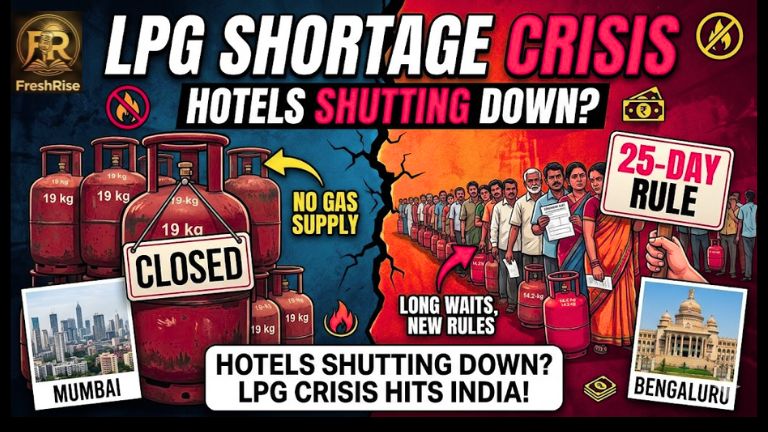
LPG Crisis: Mumbai and Bengaluru Hotels on Brink of Shutdown; Govt Issues Emergency Orders
Mumbai, March 10, 2026: A severe crisis is brewing in India’s hospitality sector as a massive commercial LPG shortage threatens to pull the shutters down on thousands of restaurants. From the bustling Khao Gallis of Mumbai to the iconic darshinis of Bengaluru, eatery owners are warning that they have only a few hours of cooking gas left.
This sudden disruption is a direct fallout of the escalating West Asia conflict, which has choked key global supply routes. For the common man, this isn’t just about dining out; it’s a matter of daily survival for students, office-goers, and medical professionals who depend on these hotels for their meals. In this report, we break down why this is happening, the government’s emergency response, and what it means for your kitchen budget.
What is the Update?
The supply of 19-kg commercial LPG cylinders has come to a grinding halt across major Indian metros. The Bangalore Hotels Association has officially warned that operations may be suspended starting March 10, 2026. Similarly, the Indian Hotels and Restaurant Association (AHAR) in Mumbai reported that 10–20% of its members are already out of gas, with 100% impact expected within 48 hours.
Who Will Benefit (and Who is Affected)?
-
Households: The government has prioritized domestic (14.2 kg) supply to ensure home kitchens keep running.
-
Essential Services: Hospitals and hostels are being given priority for the limited available stock.
-
Affected Parties: Restaurant owners, small tea stalls, street food vendors, and millions of daily commuters who eat out.
Key Highlights of the LPG Crisis
-
Supply Halt: Commercial LPG dispatches have largely stopped since Sunday.
-
Geopolitical Trigger: The U.S.-Israel-Iran conflict has disrupted the Strait of Hormuz, India’s primary energy lifeline.
-
Emergency Powers: The Centre has invoked the Essential Commodities Act, 1955 to control gas production.
-
Price Surge: Commercial cylinder prices jumped by ₹114.50, while domestic rates rose by ₹60 this week.
-
Wait Times: A mandatory 25-day gap between domestic refills has been introduced to stop hoarding.
Eligibility Criteria for New Supplies
While the shortage is widespread, the government has formed a special committee to allocate gas based on need:
-
Hospitals & Nursing Homes: Top priority for non-domestic LPG.
-
Educational Institutions: Mid-day meal providers and hostels.
-
Large Eateries: Must provide proof of existing commercial connections to apply for emergency quotas.
Important Dates to Remember
-
March 7, 2026: Steep price hike of ₹114.50 on commercial cylinders took effect.
-
March 9, 2026: Revised government order directed refiners to use all C3-C4 streams for LPG.
-
March 10, 2026: Deadline set by Bengaluru hotels for potential city-wide kitchen shutdowns.
Step-by-Step Process for Consumers
If you are facing a delay or need to book a cylinder, follow these steps:
-
Check Booking Status: Use the official apps (Indane, HP Pay, or Hello BPCL).
-
Verify the 25-Day Rule: Ensure your last delivery was at least 25 days ago; otherwise, the system will reject the booking.
-
Avoid Black Market: Do not buy domestic cylinders for commercial use, as the government has intensified raids.
-
Contact Helpline: Reach out to 1906 for LPG-related emergencies or supply complaints.
Documents Required for Commercial Refills
Restaurant owners seeking emergency supply from the newly formed committee should keep these ready:
-
Valid LPG Connection Subscription Voucher (SV).
-
Food Safety and Standards Authority of India (FSSAI) license.
-
Recent GST filing or Trade License.
-
Last three months’ gas consumption records.
Important Government Instructions
The Ministry of Petroleum and Natural Gas (MoPNG) has issued strict directives to Oil Marketing Companies (OMCs) like IOCL, BPCL, and HPCL:
-
Production Hike: Refiners must maximize LPG output and stop using propane/butane for petrochemicals.
-
Domestic First: 100% of newly produced LPG must be diverted to household consumers.
-
Anti-Hoarding: Dealers are instructed to verify all deliveries to prevent illegal diversion of domestic gas to hotels.
Expert Advice for the Public
Industry experts suggest that while the situation is tense, there is no need to panic-buy.
“The government is exploring alternative imports from Canada, Algeria, and Australia to bypass the Middle East crisis. Households should stick to their regular consumption patterns. Restaurant owners are advised to explore electric cooking alternatives where possible to reduce immediate gas dependency.” — Energy Analyst, New Delhi.
Conclusion
The commercial LPG shortage is a wake-up call regarding India’s energy vulnerability during global conflicts. While the government is working on a “war footing” to stabilize supplies, the next few days remain critical for the hospitality industry in Mumbai and Bengaluru. For now, the focus remains squarely on keeping the fire burning in Indian homes.
Frequently Asked Questions (FAQs)
Q1: Why is there a shortage of LPG cylinders in India right now? The shortage is due to supply disruptions in West Asia and the closure of the Strait of Hormuz, which handles over 80% of India’s LPG imports.
Q2: Will restaurants in Bengaluru and Mumbai really shut down? Many associations have warned of a shutdown starting March 10 if OMCs do not release commercial stocks immediately.
Q3: Has the price of domestic LPG increased? Yes, the price of a 14.2 kg domestic cylinder was increased by ₹60 on March 7, 2026.
Q4: What is the 25-day rule for LPG booking? To prevent hoarding, you can now only book a refill 25 days after your last delivery.
Q5: Is there a shortage of petrol and diesel too? No, the government has clarified that petrol and diesel stocks are “comfortable” and prices are expected to remain stable for now.
Read More :-https://freshrise.in/post-office-grama-priya-scheme-benefits-eligibility/
link:- https://news.google.com/search?q=karnataka%20news%20today%20when%3A1h&hl=en-IN&gl=IN&ceid=IN%3Aen

The Founder of Fresh Rise and a global educator, a digital news platform focused on delivering clear, verified, and meaningful stories that matter to everyday readers. I write about current affairs, government schemes, education, social issues, and global developments, presenting complex topics in a simple and easy-to-understand format.
With a background in teaching and content creation, I believes that information should be accessible to everyone. Through Fresh Rise, i aim to help readers stay informed with factual reporting, practical insights, and timely updates.