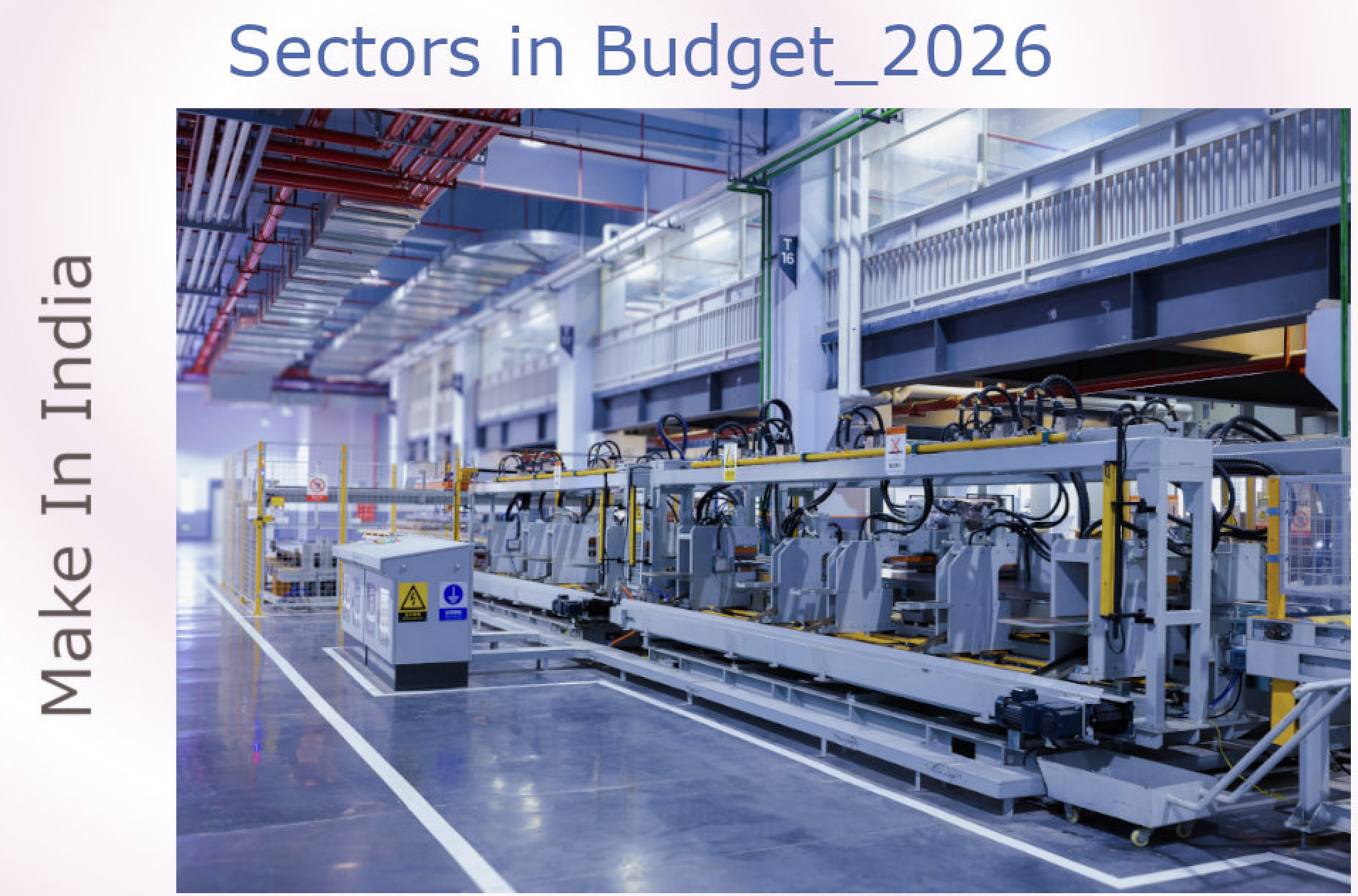
The Union Budget for 2026-27 has reinforced the government’s long-term growth strategy by placing capital expenditure firmly at its centre. With capital spending raised to ₹12.2 lakh crore from ₹11.11 lakh crore in the previous year, the government has signalled its intent to continue using public investment as a catalyst for economic expansion and corporate growth. At a time when global uncertainties and uneven private investment cycles persist, the Budget’s emphasis on capex underlines policy continuity and confidence in infrastructure-led development.
Presenting the Budget, Finance Minister Nirmala Sitharaman made it clear that sustained public investment remains critical to maintaining growth momentum. The higher allocation reflects a conscious decision to keep infrastructure spending elevated even as fiscal consolidation remains a longer-term objective. For corporate India, this steady pipeline of government-led projects provides much-needed visibility and demand assurance across multiple sectors.
Infrastructure Spending as the Growth Engine
Over the past few years, capital expenditure has emerged as the backbone of India’s economic strategy. Roads, railways, ports, airports and urban infrastructure have seen consistent funding increases, and the latest Budget builds on this trend. Analysts believe that such spending has a strong multiplier effect, supporting employment, boosting consumption and improving logistics efficiency.
Sectors such as engineering and construction, capital goods, cement, metals, logistics and power are expected to be among the biggest beneficiaries of the capex push. As government spending flows into transport corridors, urban redevelopment and energy infrastructure, companies operating in these areas gain multi-year revenue visibility. This, in turn, strengthens balance sheets and improves the willingness of private players to commit fresh investments.
Railways and High-Speed Corridors Drive Long-Term Demand
One of the standout announcements in the Budget is the plan to develop seven high-speed rail corridors connecting major economic and population centres. These corridors are envisioned as “growth connectors” that will reduce travel time, improve freight movement and support regional development.
For companies involved in rail construction, signalling systems, rolling stock, electrification and allied services, this announcement significantly enhances long-term demand prospects. The railways ecosystem — ranging from steel and cement suppliers to specialised equipment manufacturers — stands to benefit from a sustained order book over the coming years. Market participants note that such large-scale rail projects also have spillover effects on urban development, real estate and logistics hubs along the corridors.
Manufacturing and Supply-Chain Resilience in Focus
Beyond traditional infrastructure, the Budget places a strong emphasis on strengthening India’s manufacturing base and improving supply-chain resilience. The renewed push under the semiconductor mission is particularly significant, given the strategic importance of chips in electronics, artificial intelligence, defence and advanced manufacturing.
The government’s focus on building domestic capabilities in capital goods and electronics signals an intent to reduce import dependence while moving up the value chain. Plans to create dedicated chemical parks are expected to support the chemicals and specialty materials sector, which plays a critical role in pharmaceuticals, electronics and industrial manufacturing.
Another important element of the Budget is the emphasis on securing supply chains for critical minerals such as rare earths, copper and silver. As Indian companies expand in areas like EVs, renewable energy, electronics and AI-driven technologies, access to these inputs becomes increasingly vital. Policy support in this area is likely to encourage investment in mining, processing and recycling, creating new opportunities for domestic and global players.
Power and Energy to Support the AI Era
The power sector features prominently in the Budget, reflecting the growing energy requirements of a digital and AI-driven economy. Data centres, cloud infrastructure and advanced manufacturing facilities are highly energy-intensive, making reliable and affordable power a critical enabler.
Incentives and investment support aimed at strengthening generation, transmission and distribution infrastructure are expected to benefit utilities and equipment manufacturers alike. Analysts point out that a robust power ecosystem not only supports emerging industries but also improves overall productivity across the economy.
Unlocking Value Through Asset Monetisation
Another noteworthy proposal is the plan to recycle assets of central public sector enterprises through instruments such as Real Estate Investment Trusts (REITs). This approach is designed to unlock capital tied up in mature assets and redirect it towards fresh investments.
By widening participation from institutional and retail investors, asset monetisation through REITs also deepens capital markets and improves transparency. For CPSEs, this provides a non-debt avenue to raise funds, while investors gain access to stable, yield-generating assets.
Deepening Financial Markets to Crowd in Private Investment
The Budget also outlines steps to strengthen financial markets, particularly the corporate bond market. The introduction of a market-making framework and new instruments such as swaps is aimed at improving liquidity and reducing funding costs for companies.
Economists believe that these measures, combined with sustained public capex, are intended to “crowd in” private investment. Improved market depth, lower execution risks and better funding visibility can encourage corporates to revive expansion plans that may have been deferred due to uncertainty.
Execution Will Be Key
While the Budget’s direction has been widely welcomed, analysts caution that execution and timely implementation will be critical. Large infrastructure and manufacturing projects often face challenges related to land acquisition, clearances and coordination between agencies. Ensuring that allocations translate into on-ground progress will determine the ultimate impact on growth and corporate earnings.
That said, the overall mix of higher capital spending, infrastructure expansion and manufacturing-focused initiatives sends a clear message. By using public investment as a stabilising force and a growth catalyst, the government is attempting to lay the foundation for the next phase of corporate-led expansion.
As global conditions remain volatile, the Budget’s capex-heavy approach provides a measure of certainty for businesses. From railways and power to semiconductors and critical minerals, the government’s strategy aims to build capacity today to support India’s growth ambitions tomorrow.

The Founder of Fresh Rise and a global educator, a digital news platform focused on delivering clear, verified, and meaningful stories that matter to everyday readers. I write about current affairs, government schemes, education, social issues, and global developments, presenting complex topics in a simple and easy-to-understand format.
With a background in teaching and content creation, I believes that information should be accessible to everyone. Through Fresh Rise, i aim to help readers stay informed with factual reporting, practical insights, and timely updates.