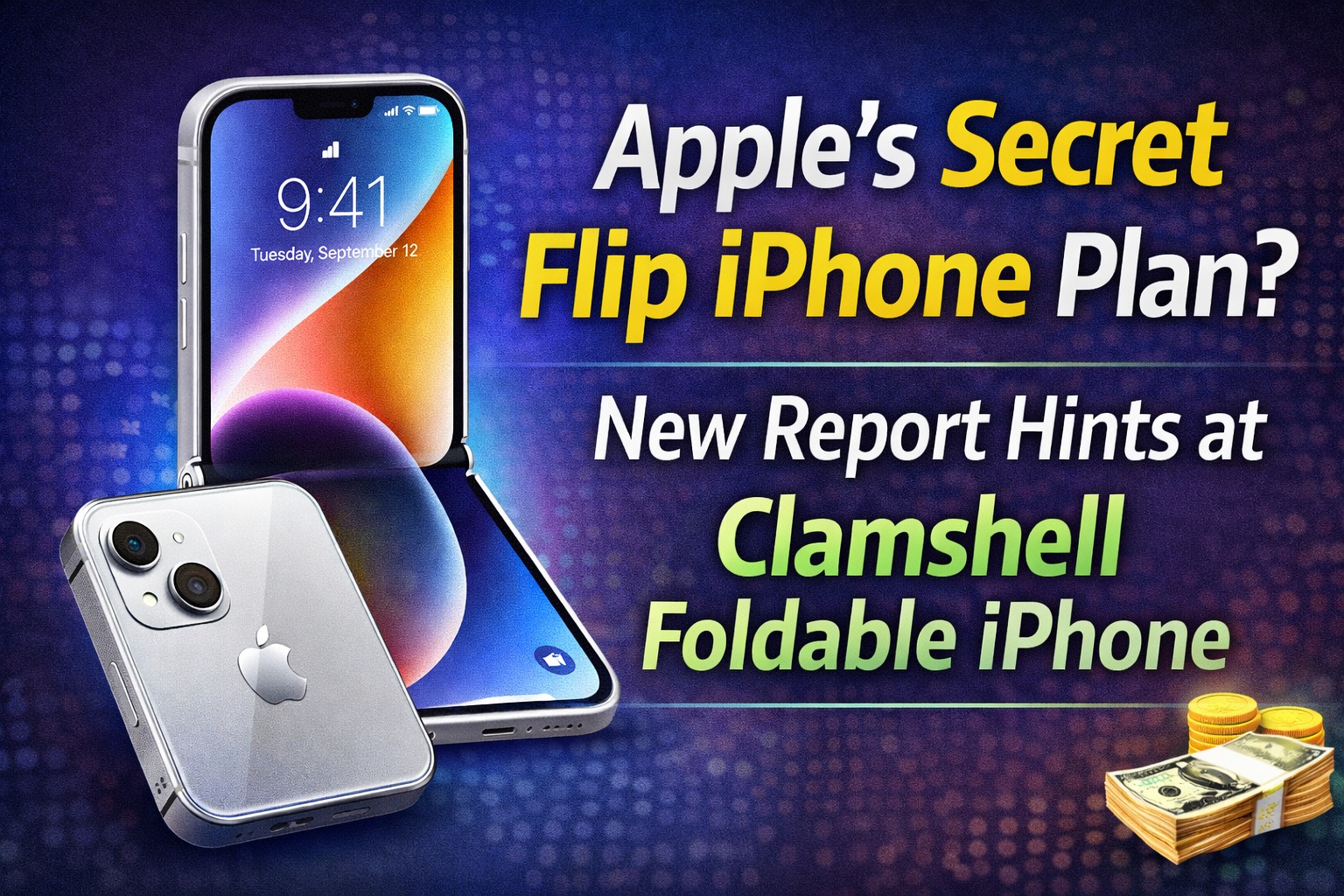
Apple’s Clamshell Flip iPhone: A Smaller Foldable Could Be on the Way
Apple may finally be warming up to a future where iPhones can fold — and not just in one shape.
According to a new report by Bloomberg’s Mark Gurman, Apple is exploring a clamshell-style foldable iPhone, similar in concept to popular Android flip phones such as Samsung’s Galaxy Z Flip and Motorola’s Razr. While Apple’s first foldable iPhone is still expected to be a premium, large-screen device, this latest development suggests the company is also considering smaller, pocket-friendly foldables.
For years, Apple has taken a cautious, almost conservative approach to foldable technology, allowing competitors to experiment publicly while it refined ideas behind the scenes. But this report signals that Apple’s foldable ambitions may be broader than initially expected — spanning multiple form factors, screen sizes, and price tiers.
A New Folding Form Is Taking Shape at Apple
The report suggests Apple is actively testing a square-shaped, clamshell foldable iPhone that folds vertically in half. When closed, the device would resemble a compact square, making it far easier to slip into a pocket or bag than today’s large-screen iPhones.
This design mirrors the “flip phone” category that has gained traction in recent years, especially among users who want large displays without carrying oversized devices all day. When unfolded, the phone would offer a traditional smartphone experience. When folded, it becomes compact and protected — a blend of nostalgia and modern engineering.
Industry watchers note that Apple has filed numerous patents over the years related to folding displays, hinges, and flexible glass, hinting that such experimentation has been underway long before foldables became mainstream.
Two Foldables, Two Strategies
Most reports agree that Apple’s first foldable iPhone will likely be a high-end, book-style device — one that unfolds into a tablet-like screen and sits firmly in the ultra-premium category. This would place it closer to Samsung’s Galaxy Z Fold lineup rather than the Flip series.
However, the emergence of a clamshell concept points to something more strategic: choice.
Much like Apple currently offers multiple iPhone sizes — standard, Plus, Pro, and Pro Max — a future lineup could include:
- A large, premium foldable iPhone
- A smaller, more affordable flip-style iPhone
This mirrors Apple’s broader product philosophy: once a category matures, Apple expands it thoughtfully rather than flooding the market all at once.
Why a Smaller Foldable iPhone Actually Makes Sense
The foldable phone market has naturally split into two camps:
- Phone-to-tablet foldables – big screens, high prices, productivity-focused
- Clamshell flip phones – compact, stylish, convenience-focused
A clamshell iPhone would appeal to users who:
- Find modern smartphones too large
- Want better pocketability
- Prefer one-handed use
- Miss the tactile satisfaction of flipping a phone shut
In recent years, smartphone sizes have steadily grown, with even “regular” phones feeling bulky to many users. A flip-style iPhone could offer the best of both worlds: a large screen when open, and a compact footprint when closed.
Apple Is Late — and That Might Be a Strength
There’s no denying that Apple is several generations behind Android manufacturers when it comes to foldables. Samsung, Huawei, Motorola, and others have been refining foldable designs for years, ironing out issues like hinge durability, screen creases, and software optimization.
But Apple’s history shows that being late doesn’t always mean being behind.
Apple often waits until:
- Technology matures
- Costs stabilize
- User experience issues are better understood
Only then does it enter a category — usually with a refined, polished product that appeals to a wider audience. The original iPhone, Apple Watch, and AirPods all followed this pattern.
If Apple does launch a clamshell iPhone, expectations will be extremely high — especially around build quality, battery life, and crease-free displays.
Software Will Be Apple’s Secret Weapon
Hardware is only half the story.
One area where Apple could truly differentiate is software optimization. iOS has never been designed for foldable screens, but Apple controls both hardware and software — giving it a major advantage.
A clamshell iPhone could introduce:
- New multitasking gestures
- App layouts optimized for folding
- Smarter use of the outer display
- Camera previews and widgets when folded
Apple’s tight ecosystem could also allow seamless continuity between folded and unfolded states — something Android foldables are still refining.
What About Screen Size and Design?
Early chatter suggests the unfolded screen could be around 5.5 inches, though opinions are mixed. While some users crave smaller phones, others worry that shrinking too much could compromise usability.
Apple will likely test multiple prototypes before settling on a final size. Design decisions will depend heavily on:
- Battery efficiency
- Fold durability
- Display brightness and longevity
- App compatibility
As always, Apple is unlikely to rush these choices.
When Could a Clamshell iPhone Launch?
There is no confirmed release date, and most credible reports suggest any foldable iPhone is still years away. Earlier rumors pointed to 2027 or 2028 as a possible window, depending on how quickly Apple feels confident about the technology.
The clamshell version, if real, would likely arrive after Apple’s first foldable — once the company establishes its credibility in the foldable space.
A Touch of Nostalgia, Reimagined
Beyond specs and strategy, there’s an emotional element here.
Many users fondly remember flipping phones shut to end a call — a small but satisfying gesture that modern smartphones lack. A clamshell iPhone could revive that experience, blending nostalgia with cutting-edge tech.
Android users have enjoyed this for years. Apple fans, for the first time, may soon get their turn.
The Bigger Picture: Apple’s Foldable Future
The key takeaway from this report isn’t just about a flip iPhone — it’s about Apple’s mindset shifting.
Apple appears to be preparing for a future where:
- iPhones don’t come in just one shape
- Foldables aren’t niche products
- Users can choose devices that fit their lifestyle, not just screen size
If Apple executes this correctly, foldable iPhones could eventually feel as normal as today’s Pro and Pro Max models.
Final Thoughts
While a clamshell foldable iPhone remains firmly in the rumor stage, the idea alone signals something important: Apple is no longer ignoring foldables.
Whether it arrives in 2027, 2028, or later, a flip-style iPhone could redefine what portability means in the Apple ecosystem — and finally give users an iPhone that fits comfortably in both their pocket and their hand.
For now, all eyes remain on Cupertino.

The Founder of Fresh Rise and a global educator, a digital news platform focused on delivering clear, verified, and meaningful stories that matter to everyday readers. I write about current affairs, government schemes, education, social issues, and global developments, presenting complex topics in a simple and easy-to-understand format.
With a background in teaching and content creation, I believes that information should be accessible to everyone. Through Fresh Rise, i aim to help readers stay informed with factual reporting, practical insights, and timely updates.