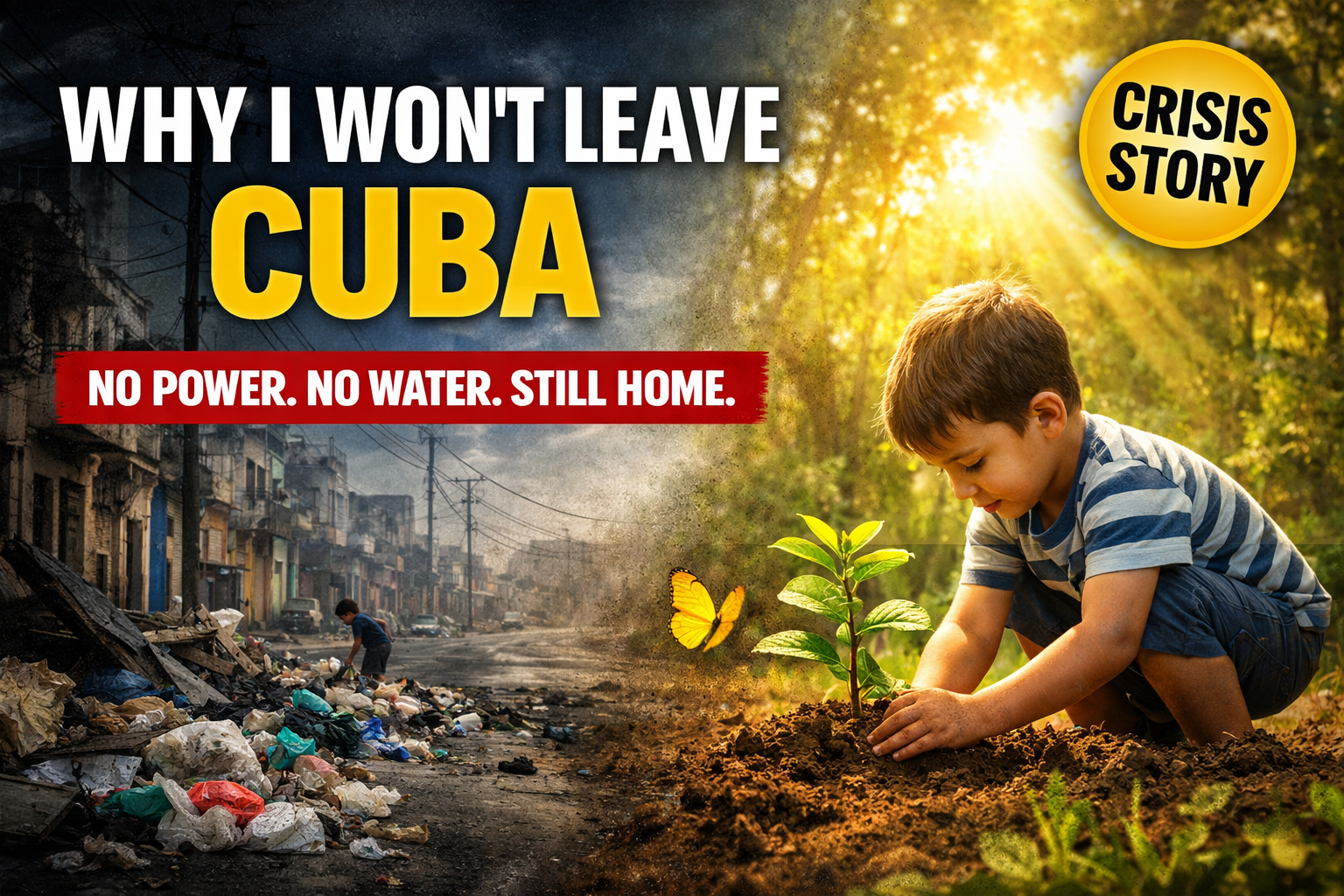
Why I Won’t Leave Cuba is not a political slogan. It is a personal confession.
No water. No electricity. Children begging in streets filled with rubbish. Power cuts lasting 16 hours. Hospitals without medicine. A country exhausted.
And yet — I stay.
This is not blind loyalty. It is not denial. It is something deeper. Something rooted in history, in family, in loss, and in love.
A Country in Collapse
Cuba is living through one of the worst crises in its modern history.
Since 2019, the economy has contracted sharply. Inflation has crushed salaries. State pensions are worth just a few dollars a month. The once-proud electricity grid now collapses regularly.
In Havana:
-
Food rots during blackouts
-
Water pumps fail
-
Children miss school
-
Families cook over firewood
The dreams promised by the revolution of Fidel Castro now feel distant.
The collapse of the Soviet Union once brought the “Special Period.” But older Cubans say this time feels different.
Back then, they had hope.
Now, many say they don’t.
Why I Won’t Leave Cuba Even Now
So why stay?
Why remain in a country where:
-
20% of the population has emigrated
-
Doctors are leaving
-
Young professionals drive taxis
-
Begging children fill the streets
Because Cuba is not just a failing economy.
It is memory.
It is family.
It is identity.
My father-in-law Felix was nine when revolutionary forces dynamited his family’s farm during the 1970 sugar campaign. Trees that had grown for generations exploded into the sky.
The land was taken. The revolution demanded sacrifice.
But it also gave him something powerful: education.
He studied philosophy in the Soviet Union. He believed in ideas. In justice. In equality.
That belief still lives inside him.
And inside this country.
The Harsh Reality of Today’s Cuba
Life now is raw.
In October 2024, during a nationwide blackout, my toddler had an accident on the floor. There was no running water. No medicine for infection. No refrigeration for food.
In that moment, I asked myself: What are we doing here?
We could leave.
Many do.
Miami’s exile community grows every month. Leaders like Marco Rubio openly call Cuba a “fourth world” country. From Florida, intervention sounds simple.
But from Havana, it feels different.
Because Cuba is not just statistics.
It is people who still greet strangers warmly.
It is weddings where rice is too precious to throw.
It is teachers holding classes in darkness.
The Revolution’s Promise — And Its Pain
The Cuban Revolution made the island an icon of global socialism.
Healthcare and education were universal. Illiteracy was wiped out. Doctors were trained by the thousands.
But attempts at economic independence failed:
-
The 10-million-ton sugar harvest never materialized
-
Nuclear power ambitions collapsed
-
Tourism expanded even as visitor numbers fell
In 2016, Barack Obama visited Havana, speaking of burying the Cold War.
For a brief moment, there was optimism.
But reforms stalled.
Currency unification triggered hyperinflation. Savings evaporated. Salaries became meaningless.
The government blames the U.S. embargo.
Critics blame centralized control.
Most ordinary Cubans are simply tired.
Why I Won’t Leave Cuba When Others Do
My wife studies literature about exile. Writers trying to understand broken families scattered across continents.
Ironically, she stays.
She looks at Havana’s fading buildings and says, “All this… in the Caribbean.”
Cuba is strange.
It produces philosophers who become fishermen. Psychologists who become tour guides. Doctors who drive taxis.
It is collapsing — yet it refuses to disappear.
When we returned to Felix’s childhood farm, decades after it was seized, we expected ruins.
Instead, we found forest.
The land had healed itself.
No foundations remained. No walls. Just thick green growth reclaiming everything.
We planted a lemon tree there — grown from fruit in Felix’s later home.
It felt symbolic.
Maybe foolish.
Maybe hopeful.
But deeply necessary.
That is also part of Why I Won’t Leave Cuba.
The Emotional Cost of Staying
Staying means watching friends depart.
It means elderly parents growing lonely.
It means anger at leadership.
It means frustration at missed opportunities.
It also means resisting cynicism.
Cuba is not only a failed system.
It is also:
-
A culture of poetry
-
A tradition of intellectualism
-
A fierce sense of dignity
Before the revolution, thinkers like José Martí shaped Cuban identity. Artists like Wifredo Lam brought global recognition.
This intellectual spirit did not begin with communism.
And it will not end with it.
The Big Question: What Was It All For?
Many Cubans now ask:
What have we lived through?
What was the sacrifice for?
Was the dream worth it?
Political prisoner José Daniel Ferrer, now in exile, believes change is inevitable. He speaks of freedom and prosperity after collapse.
Others fear chaos.
The truth is, no one knows what comes next.
That uncertainty is terrifying.
But it is also human.
A Country Waiting
Driving across the island, you see exhaustion.
Empty hotels with polished floors.
Clean lobbies without guests.
Tourist beaches without tourists.
Wedding ceremonies where rice is saved instead of thrown.
The country feels like it is waiting.
Waiting for reform.
Waiting for collapse.
Waiting for rescue.
Waiting for something unnamed.
Final Reflection
To outsiders, leaving seems obvious.
But leaving is not just moving. It is abandoning history.
It is severing roots.
It is accepting that the experiment — beautiful, flawed, tragic — has ended.
My father-in-law once said something that stayed with me:
“You use communism as a hammer. To me, it remains a beautiful idea.”
Maybe that idea failed in practice. Maybe it was mismanaged. Maybe it became rigid and authoritarian.
But to those who lived it, it was once hope.
And hope leaves scars when it collapses.
Planting that lemon tree in the reclaimed forest felt like an act of defiance — not political, but personal.
A reminder that life grows again.
That soil remembers.
That history cycles.
That love for a place does not vanish when the lights go out.
Why I Won’t Leave Cuba — The Real Answer
Because this island is not just crisis headlines.
It is my wife’s voice marveling at Caribbean architecture.
It is my son digging in rich soil.
It is old men sweeping sidewalks with quiet dignity.
It is philosophers who still believe in ideas.
It is a people bruised but not erased.
Why I Won’t Leave Cuba is not about ignoring suffering.
It is about refusing to reduce a country to its worst moment.
Maybe change will come. Maybe it will hurt. Maybe it will heal.
But until then, this is home.
If this story moved you, share it. Conversations matter. Cuba’s story is not finished.
FAQ
Why I Won’t Leave Cuba despite the crisis?
Because Cuba is more than economic hardship. For many families, history, identity, and emotional roots outweigh material struggles. Staying is not always political — sometimes it is deeply personal.
Read More :- https://freshrise.in/dual-nationals-to-be-denied-entry-to-uk-from-25-february/
Link:- https://kapublic.com/https-kapublic-com-p625previewtrue/#more-625
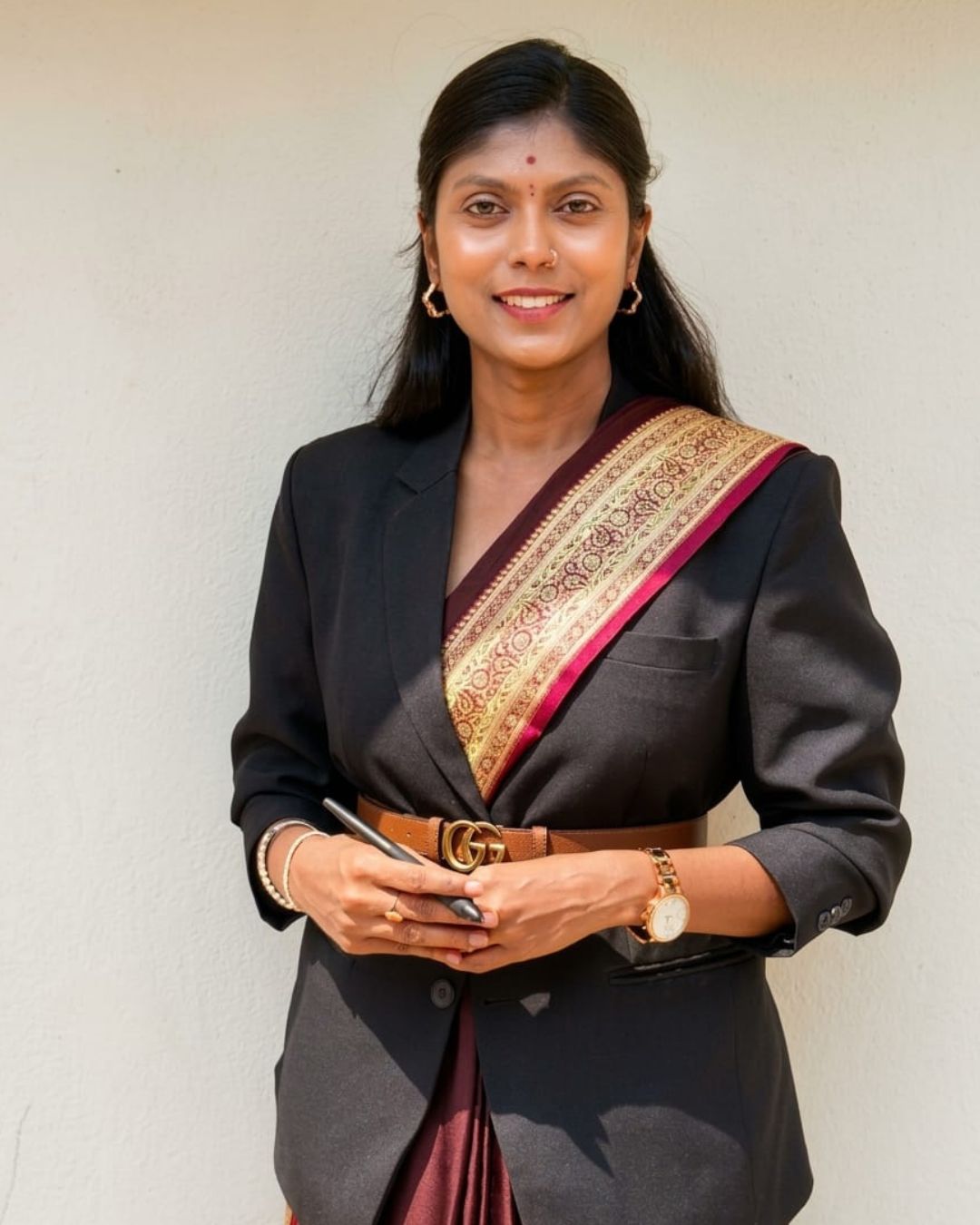
The Founder of Fresh Rise and a global educator, a digital news platform focused on delivering clear, verified, and meaningful stories that matter to everyday readers. I write about current affairs, government schemes, education, social issues, and global developments, presenting complex topics in a simple and easy-to-understand format.
With a background in teaching and content creation, I believes that information should be accessible to everyone. Through Fresh Rise, i aim to help readers stay informed with factual reporting, practical insights, and timely updates.