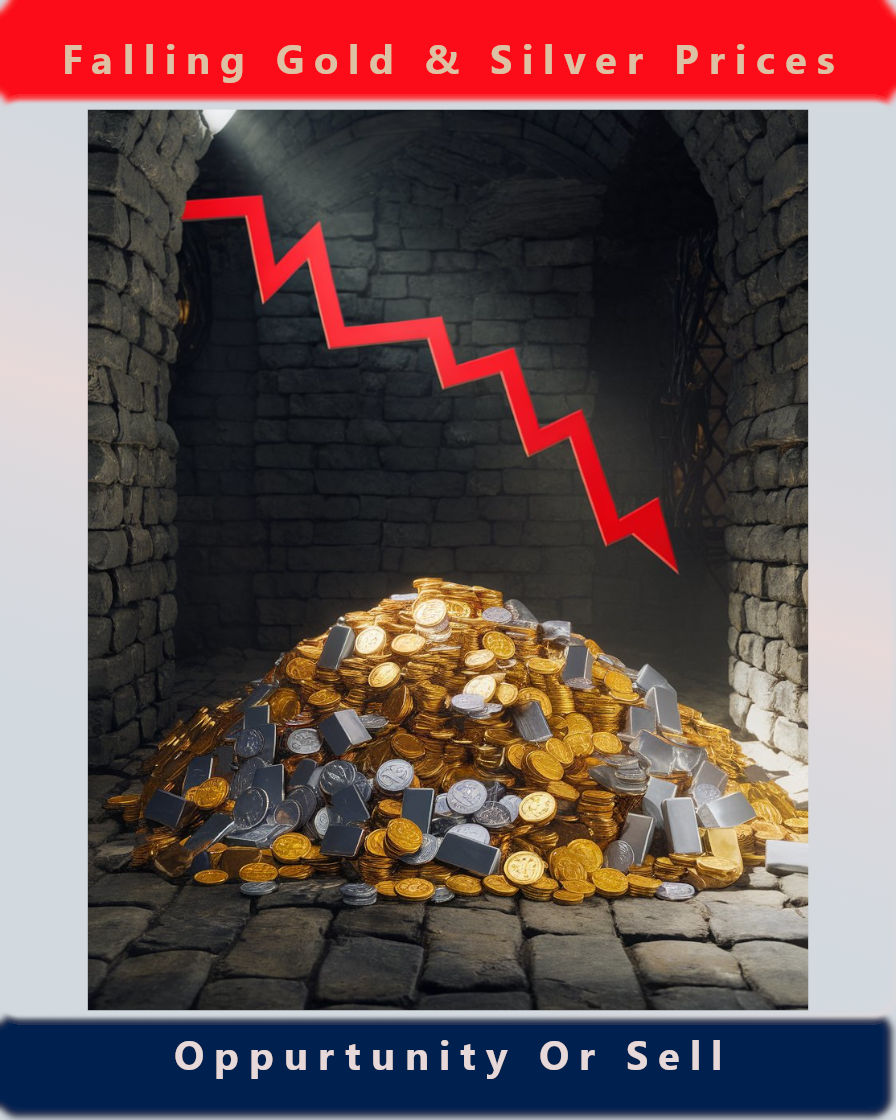
Is the Gold and Silver Investment Narrative Coming to an End After a 17% Crash? Experts Weigh In
For years, gold and silver have been considered safe-haven assets, attracting investors during times of global uncertainty. Their reputation as wealth preservers has made them staples in portfolios worldwide. However, on January 30, the precious metals market witnessed one of its sharpest single-day declines in recent history, leaving many investors questioning whether the bull run is finally over—or if this is simply a temporary correction.
The Sudden Crash: Numbers That Shocked the Market
Gold futures with April expiry on the Multi Commodity Exchange (MCX) dropped nearly 9 percent, hitting a low of ₹1,67,406 per 10 grams. This was a dramatic fall from the fresh lifetime high of ₹1,93,096 per 10 grams recorded just a day earlier. In absolute terms, gold futures lost ₹25,690 per 10 grams in a single trading session—a decline of about 13 percent.
Silver futures with March expiry experienced an even steeper fall. Prices plunged almost 17 percent to ₹3,32,002 per kilogram, compared to the record high of ₹4,20,048 per kilogram touched the previous day. This translates to a staggering ₹88,046 loss per kilogram in just 24 hours, marking a 21 percent decline.
Such sharp moves in both metals rattled investors, especially those who had entered the market at higher levels, expecting the rally to continue.
The Fed Factor: Kevin Warsh’s Appointment
The crash coincided with speculation surrounding the U.S. Federal Reserve’s leadership. Markets were abuzz with rumors that President Donald Trump might appoint a more hawkish candidate to head the central bank. Later in the day, those speculations were confirmed when Trump announced Kevin Warsh, a former Federal Reserve Governor, as the new chair.
Warsh is known for his cautious stance on inflation and his calls for reducing the Fed’s balance sheet. His appointment signaled to markets that aggressive rate cuts or dovish monetary policies might not be on the horizon. This triggered a stronger U.S. dollar and rising bond yields—both of which typically weigh on gold and silver prices.
Profit-Booking or Trend Reversal?
Despite the dramatic fall, experts argue that the correction should not be mistaken for a fundamental shift in the long-term narrative of precious metals. Pranav Koomar, Founder and CEO of PlusCash, explained that the decline was largely a result of profit-booking after an extended rally. According to him, high speculative positioning, dollar strength, and bond yield movements contributed to the correction.
Koomar emphasized that from a medium- to long-term perspective, gold and silver remain supported by global uncertainty, central bank buying, and tight supply dynamics. “Investors should consider any fall as a buying opportunity and not a sign of any change in the trend,” he said.
Market Sentiment and Volatility Ahead
Maneesh Sharma, AVP – Commodities & Currencies at Anand Rathi Shares & Stock Brokers, echoed similar sentiments but highlighted the role of Warsh’s appointment in fueling volatility. He noted that Warsh’s stance on inflation risks and balance sheet reduction made markets nervous, leading to sharp moves in precious metals.
Sharma added that upcoming U.S. labor market reports could provide further cues. If data points to weakening labor conditions, it may influence Fed policy expectations and, in turn, precious metal prices. On the domestic front, the Union Budget announcement could also play a role, especially if there are changes in import duty structures that directly impact MCX prices.
“Overall volatility with a corrective bias is expected to persist for a few more sessions before markets stabilize at lower levels,” Sharma said.
Why Investors Shouldn’t Panic
While the crash was dramatic, seasoned investors know that gold and silver are inherently volatile. Historically, both metals have experienced sharp corrections during bull runs, only to recover and move higher over time. The fundamental drivers—geopolitical tensions, inflationary pressures, and central bank policies—remain intact.
Moreover, central banks across the globe continue to accumulate gold as part of their reserves, signaling confidence in its long-term value. Silver, on the other hand, benefits not only from its role as a precious metal but also from industrial demand, particularly in sectors like renewable energy and electronics.
The Bigger Picture
The January 30 crash serves as a reminder that no asset class is immune to volatility. For investors, the key lies in distinguishing between short-term corrections and long-term trend reversals. Analysts agree that the recent fall is more of a healthy correction than the end of the precious metals rally.
For those who missed the earlier rally, the current dip could present an attractive entry point. For existing investors, patience and a long-term perspective may prove rewarding.

The Founder of Fresh Rise and a global educator, a digital news platform focused on delivering clear, verified, and meaningful stories that matter to everyday readers. I write about current affairs, government schemes, education, social issues, and global developments, presenting complex topics in a simple and easy-to-understand format.
With a background in teaching and content creation, I believes that information should be accessible to everyone. Through Fresh Rise, i aim to help readers stay informed with factual reporting, practical insights, and timely updates.