Iran-US Tensions: America Deploys F-35, F-22 and F-16 Jets to Middle East – What We Know Now
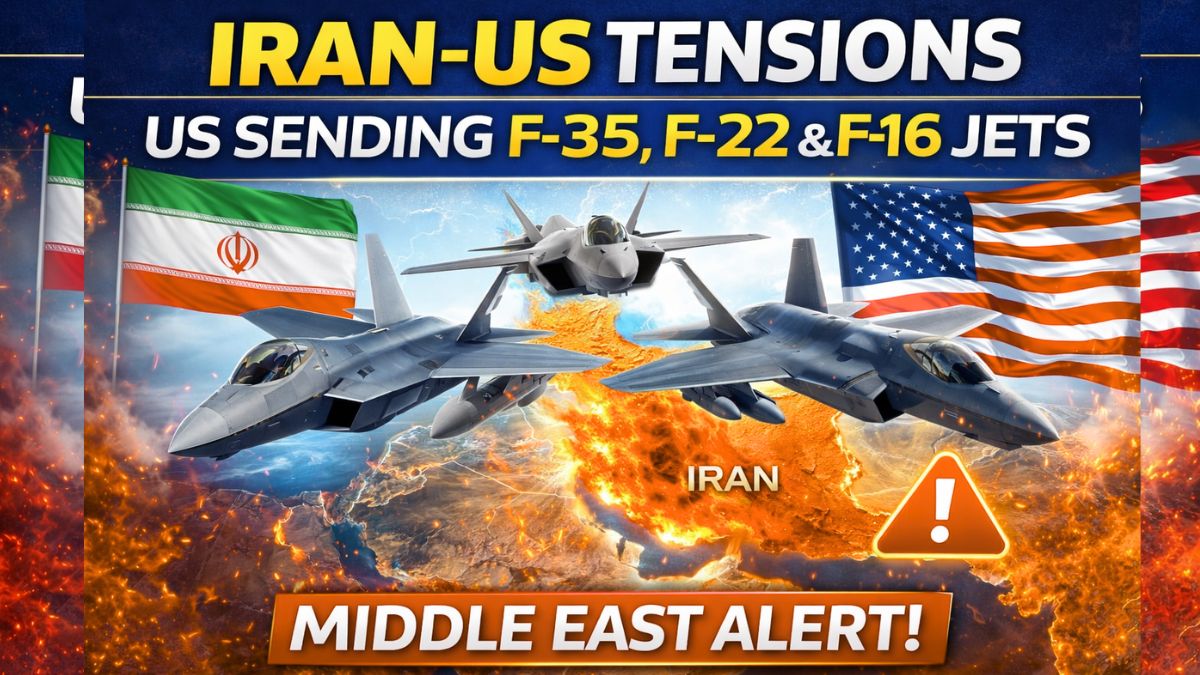
In the latest chapter of Iran-US tensions, the United States has sharply increased its military presence in the Middle East, deploying a significant force of advanced fighter jets — including F-35s, F-22s, and F-16s — amid ongoing nuclear negotiations with Tehran. This buildup comes as diplomatic talks continue alongside worrying military movements that have grabbed global attention.
US Sends Dozens of Fighter Jets: What’s Happening?
Independent flight trackers and military sources have confirmed that more than 50 American fighter jets, including cutting-edge F-35 stealth fighters, F-22 Raptors, and F-16s, are en route to the Middle East as part of an enhanced military posture near Iran.
This deployment is seen as a clear demonstration of U.S. military readiness and resolve in the region, possibly aimed at pressuring Iran during delicate nuclear negotiations.
The presence of such a large contingent of advanced aircraft suggests the U.S. is preparing for a wide range of scenarios — from defensive operations to deterrence against any hostile action by Tehran or Iran-aligned forces.
Strategic Naval Reinforcement: USS Gerald R. Ford and More
Beyond fighter jets, the U.S. has also ordered its most advanced aircraft carrier — the USS Gerald R. Ford — to redeploy to the Middle East.
Reports indicate this supercarrier will join other naval assets, potentially creating a dual-carrier strike group in a rare and powerful show of force.
Experts say the arrival of multiple aircraft carriers will extend U.S. strike and defense capabilities far beyond any previous level, offering options for both deterrence and rapid response should tensions escalate.
Why the U.S. Is Boosting Forces Now
The deployment of jets and carriers comes while Iran and the United States are engaged in indirect nuclear program negotiations in Europe.
Although diplomats have reported some progress and a “general understanding” on key principles, many gaps remain. Both sides are trying to find a deal that would reduce the risk of conflict while heavily scrutinizing Tehran’s nuclear ambitions.
Experts say the military buildup may be intended to strengthen the U.S. position at the negotiating table, signalling that Washington is serious about enforcement while still offering a peaceful resolution.
Iran’s Response: Naval Drills and Strategic Moves
Iran has reacted strongly, conducting live-fire military drills and partially closing the Strait of Hormuz — a crucial corridor through which roughly 20% of the world’s oil shipments pass.
The closure, even if temporary, is a rare and bold move — the first such shutdown of this vital waterway in decades. Iran’s Revolutionary Guard said it was a response to security concerns and coincided with missile exercises in the area.
Iranian leaders have also issued stern warnings to the U.S., with public statements suggesting any miscalculation could have severe consequences for regional stability.
Global Economic and Strategic Ripples
The ongoing Iran-US tensions are not contained solely within military or diplomatic circles — they are affecting global markets as well.
The possibility of disruption in the Persian Gulf — especially around the Strait of Hormuz — has already caused oil prices to fluctuate, due to fears that any escalation could impact global energy supply.
Countries dependent on Middle Eastern oil — many of them U.S. allies — are monitoring the situation closely, as are global financial markets that are highly sensitive to geopolitical instability in this region.
Diplomacy Continues Amid the Show of Force
Despite the sharp military buildup, negotiations between the U.S. and Iran have not collapsed. Delegations have continued indirect talks in Geneva and Oman, and both sides have expressed cautious hope for progress on some issues — though significant challenges remain before a comprehensive agreement is reached.
Some analysts believe that the U.S. is using its military deployment not to provoke conflict, but to increase leverage in diplomatic discussions, demonstrating that it remains committed to preventing Iran from obtaining nuclear weapons capability.
What Comes Next? A Fragile Balance
As Iran-US tensions intensify, the world watches nervously. Neither side has shown signs of backing down, but diplomacy is still underway.
The deployment of F-35, F-22, and F-16 jets along with carrier strike groups underscores how high the stakes are. Whether this posture will bring heightened security or spark further escalation remains uncertain, but the message is clear — both military might and diplomatic channels are being exercised simultaneously.
Global powers, including regional neighbors and world leaders, continue to call for calm, urging restraint and negotiated settlements rather than confrontation.
Final Takeaway
Iran and the United States are at a critical juncture — one where diplomacy and military readiness are both on full display. The massive deployment of jets and naval assets shows the gravity of the situation, while ongoing talks reveal that all sides still seek — at least for now — a peaceful resolution.
This unfolding story is a reminder that global stability hinges on careful diplomatic leadership, courage under pressure, and an understanding that war carries consequences far beyond any single battlefield.
Stay tuned as we continue to monitor this developing situation and bring updates on the latest in Iran-US tensions and world affairs.
FAQ
What exactly triggered this latest Iran-US tensions?
The current buildup of U.S. fighter jets and naval power is linked to ongoing nuclear negotiations with Iran and concerns over Tehran’s nuclear programme ambitions. International pressure and military manoeuvres have both played a role in escalating the situation.
Read More:- https://freshrise.in/ukraine-russia-war-latest-putin-400-drones-geneva-talks/

The Founder of Fresh Rise and a global educator, a digital news platform focused on delivering clear, verified, and meaningful stories that matter to everyday readers. I write about current affairs, government schemes, education, social issues, and global developments, presenting complex topics in a simple and easy-to-understand format.
With a background in teaching and content creation, I believes that information should be accessible to everyone. Through Fresh Rise, i aim to help readers stay informed with factual reporting, practical insights, and timely updates.