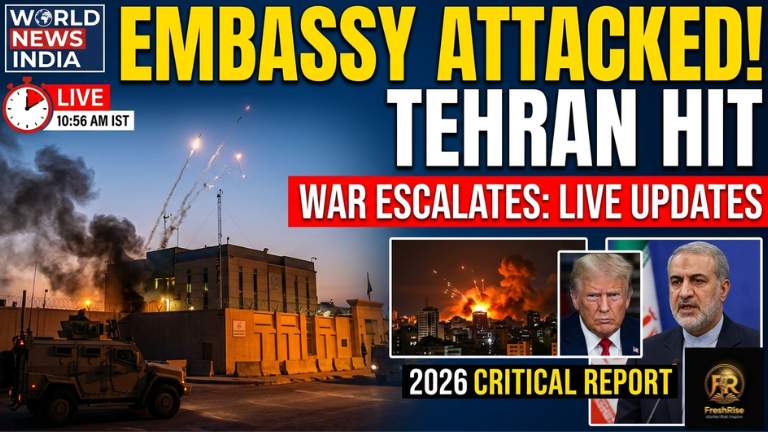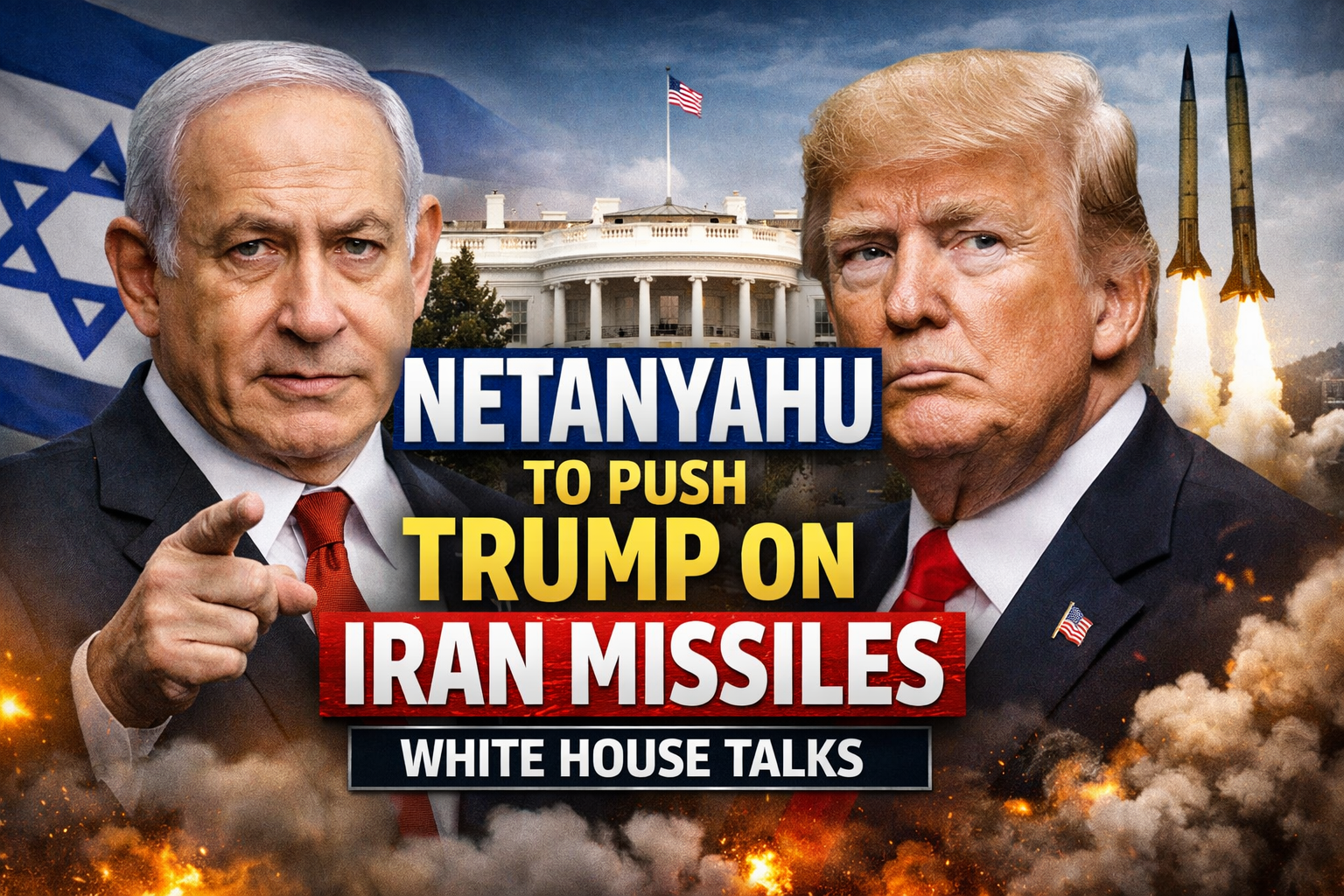
Netanyahu to push Trump on Iran missiles in White House talks — and the world is watching.
In a sudden and dramatic move, Israeli Prime Minister Benjamin Netanyahu rushed to Washington to meet Donald Trump at the White House. The stakes are high. The mood is tense. And the message from Israel is clear: take a tougher stand on Iran now.
With nuclear negotiations between the US and Iran quietly restarting in Oman, Netanyahu’s visit signals urgency, pressure, and possibly a big shift in American foreign policy. This is not just another diplomatic meeting. It could shape the future of the Middle East — and beyond.
Netanyahu to Push Trump on Iran Missiles in White House Talks Amid Nuclear Tensions
The White House meeting, scheduled for 11am, comes at a sensitive time. Iran and the United States resumed talks last week aimed at limiting Tehran’s nuclear activities. But Israel fears the deal may not go far enough.
According to reports, Netanyahu will press Trump to:
- Demand stricter limits on Iran’s nuclear program
- Take a harder stance on Iran’s ballistic missile development
- Increase military pressure in the region
- Avoid concessions that could weaken sanctions
Trump hinted at stronger action even before the meeting. He said he is considering sending a second US “armada” to the Middle East. That word alone sparked shock across diplomatic circles.
Meanwhile, Iran responded firmly. President Masoud Pezeshkian declared that his country will “not yield to excessive demands,” although he insisted Iran is not seeking nuclear weapons.
The tension is rising — and diplomacy is hanging by a thread.
Why Netanyahu to Push Trump on Iran Missiles in White House Talks Matters Now
This is Netanyahu’s sixth visit to the United States since Trump returned to office. That frequency alone signals urgency.
Originally, Netanyahu was expected in Washington later this month for discussions on Gaza. But he reportedly brought the trip forward as US-Iran talks gained momentum. That timing speaks volumes.
What Is Israel Worried About?
Israel has long warned that:
- Iran’s missile program continues to expand
- Nuclear negotiations may ignore regional security threats
- Sanctions relief could strengthen Iran militarily
For Israel, this is not just policy — it is survival.
The phrase Netanyahu to push Trump on Iran missiles in White House talks is now dominating headlines because it represents more than diplomacy. It signals pressure on Trump to choose between negotiation and confrontation.
Trump’s Balancing Act
Trump finds himself in a complicated position.
On one side:
- He wants a deal that avoids war
- He has signaled openness to diplomacy
On the other:
- He faces pressure from Israel
- He faces criticism from Republicans who favor a harder stance
- He faces scrutiny from the Supreme Court over tariff powers
Adding to the political storm, Trump confirmed in an interview that he sets tariff rates partly based on his “feelings” about foreign leaders. That admission raised eyebrows in financial markets.
At the same time, the US jobs report is due, and the White House is already managing expectations. Economic data and foreign policy are now colliding in one intense political week.
Other Political Storms Brewing
While Netanyahu to push Trump on Iran missiles in White House talks grabs global attention, several domestic political stories are unfolding:
Epstein Files Pressure
Attorney General Pam Bondi is set to testify before Congress over the handling of Jeffrey Epstein-related documents. Lawmakers — including Republicans — are questioning why millions of pages remain heavily redacted.
Detroit-Windsor Bridge Dispute
Trump’s sudden opposition to a publicly funded US-Canada bridge project has triggered controversy. Canada’s Prime Minister Mark Carney insists that Trump’s claims about funding are untrue.
Free Speech Controversies
From investigating Super Bowl lyrics to attacking European migration policies, the administration faces criticism over its increasingly aggressive political tone.
In short, Washington is in overdrive.
The Global Impact
If Netanyahu to push Trump on Iran missiles in White House talks results in a harder US stance, the consequences could be immediate:
- Oil prices may spike
- Middle East tensions could escalate
- Nuclear negotiations could collapse
- Regional military movements could increase
Global markets are already nervous. Diplomats across Europe are quietly urging restraint.
For readers wanting deeper context on US-Iran nuclear negotiations, the International Atomic Energy Agency (IAEA) provides authoritative updates on nuclear monitoring activities.
For more on how US foreign policy affects global markets, you can read our detailed analysis on [US foreign policy and economic impact] (internal link suggestion).
A Turning Point in Diplomacy
This moment feels bigger than a single meeting.
The words Netanyahu to push Trump on Iran missiles in White House talks capture a broader struggle: diplomacy versus deterrence. Peace talks versus pressure tactics. Negotiation versus military signaling.
Trump’s decision in the coming hours could either:
- Strengthen negotiations
- Harden positions on all sides
- Or push the region toward deeper instability
History shows that small diplomatic shifts can trigger massive consequences. A statement. A sanction. A military deployment. Each move echoes far beyond Washington.
The Emotional Weight of the Moment
Behind every headline are millions of ordinary people — in Israel, Iran, America, and across the Middle East — who fear what escalation could mean.
Families remember past conflicts. Markets remember past sanctions. Soldiers remember past deployments.
When we read Netanyahu to push Trump on Iran missiles in White House talks, it is easy to see it as just politics. But for many, it feels like standing on the edge of uncertainty.
Will this bring good news? Or a dangerous new chapter?
Diplomacy is fragile. Trust is fragile. And in times like this, leadership decisions carry enormous emotional and global weight.
What Happens Next?
The White House meeting may last only a few hours. But its consequences could shape months — even years — of international relations.
If Trump chooses a tougher line, Iran may respond with equal resistance. If he leans toward compromise, Israel may publicly challenge the strategy. Either way, the political temperature is rising.
The phrase Netanyahu to push Trump on Iran missiles in White House talks is more than a trending headline. It represents a crossroads moment in global diplomacy.
The world is watching. Markets are watching. Citizens are watching.
And as events unfold, one thing is certain — this story is far from over.
Stay alert. Stay informed. And share this update with others who want to understand what this critical moment means for global peace and US politics.
FAQ
Why is Netanyahu to push Trump on Iran missiles in White House talks important?
The meeting is crucial because it could influence US policy on Iran’s nuclear program and missile development. A tougher stance could reshape Middle East diplomacy, affect global oil markets, and change the direction of US-Iran negotiations.
Read More:- https://freshrise.in/ntpc-engineering-executive-trainees-recruitment-2026-515-post-apply-online/
Link:- https://kapublic.com/https-kapublic-com-p594previewtrue/#more-594

The Founder of Fresh Rise and a global educator, a digital news platform focused on delivering clear, verified, and meaningful stories that matter to everyday readers. I write about current affairs, government schemes, education, social issues, and global developments, presenting complex topics in a simple and easy-to-understand format.
With a background in teaching and content creation, I believes that information should be accessible to everyone. Through Fresh Rise, i aim to help readers stay informed with factual reporting, practical insights, and timely updates.