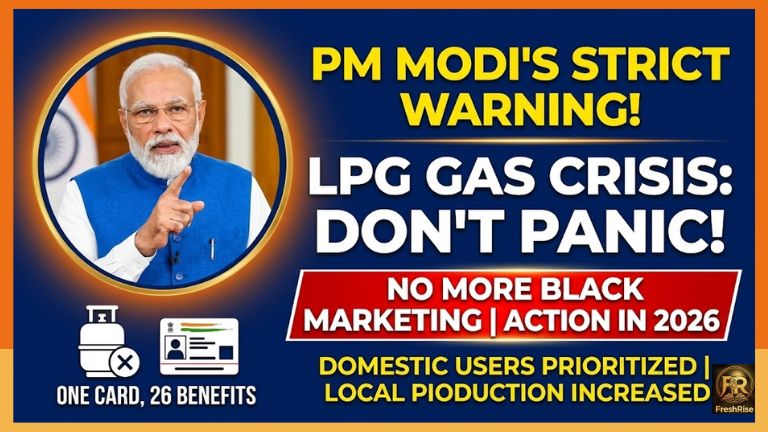
LPG Gas Crisis: PM Modi Issues Bold Warning Over Supply Shortage; Strict Action Against Hoarders
The kitchen budgets of millions of Indians are under pressure as a severe LPG cylinder shortage hits the country this March 2026. With commercial cylinders becoming nearly impossible to find, hotels and restaurants in major cities like Bengaluru, Mumbai, and Kolkata are on the verge of shutting down.
Amidst this growing tension, Prime Minister Narendra Modi has broken his silence. Speaking at the NXT Summit on Thursday, the PM addressed the nation’s concerns, acknowledging the crisis while sending a clear, “zero-tolerance” message to those exploiting the situation.
If you are worried about your next refill or rising prices, here is everything you need to know about the current gas crisis and the government’s plan to fix it.
1. What is the Update?
India is currently grappling with a massive disruption in the LPG supply chain. Due to the ongoing conflict in West Asia (Middle East), specifically involving Iran, Israel, and the US, the strategic Strait of Hormuz has seen restricted movement.
Since India imports nearly 85% of its LPG requirements through this route, the blockade has led to a sharp dip in arrivals, triggering a nationwide panic and long queues at distribution centers.
2. Who Will Benefit from This News?
-
Home Makers: Families worried about domestic cylinder availability.
-
Restaurant Owners: Businesses struggling to procure commercial LPG.
-
General Public: To avoid falling prey to black market prices and rumors.
3. Key Highlights of the Crisis
-
Cause: Disruption of oil and gas tankers in the Strait of Hormuz.
-
Impact Cities: Severe shortages reported in Bengaluru, Mumbai, and Kolkata.
-
PM’s Warning: Strict legal action against black marketers and hoarders.
-
Production Boost: Local LPG production is being increased by 25% immediately.
-
Alternative Routes: Government is scouting for non-Middle Eastern supply sources.
4. Eligibility for Priority Refills
The government has invoked the Essential Commodities Act to prioritize supply.
-
Domestic Users (Ujjwala & Regular): Will receive top priority over commercial entities.
-
Essential Services: Hospitals and community kitchens are being prioritized.
5. Important Dates
-
Crisis Peak: March 2026.
-
PM Modi’s Address: Thursday (at the NXT Summit).
-
Supply Normalization Goal: Petroleum Ministry officials aim to stabilize the situation by the end of next month.
6. Step-by-Step Government Response
-
Invoking Laws: Implementing the Essential Commodities Act to stop hoarding.
-
Boosting Local Output: Increasing domestic refinery production by 25%.
-
Alternative Sourcing: Petroleum Secretary Sujata Sharma confirmed talks with alternative oil-producing nations.
-
Crackdown: Police and food supply departments are raiding warehouses to stop the illegal sale of cylinders.
7. Documents Required for New Connections/Refills
While the crisis lasts, ensure your paperwork is digital and ready for faster processing:
-
Aadhaar Card: Linked to your gas connection.
-
Registered Mobile Number: For OTP-based booking to avoid manual errors.
-
Consumer ID: Keep your blue book or latest invoice handy.
8. Important Government Instructions
-
Do Not Panic Buy: PM Modi has urged citizens not to book multiple cylinders in advance, as it worsens the shortage.
-
Report Illegal Sales: If you see someone selling cylinders at inflated prices, report them to the local helpline or the 1906 gas emergency/complaint number.
-
Avoid Rumors: The PM stated that spreading fear hurts the country more than the actual shortage.
9. Expert Advice
Financial and energy experts suggest that while the conflict has spiked global prices, the Indian government’s move to diversify supply routes will prevent a total blackout.
-
Practical Tip: Switch to induction cooktops or electric kettles for minor heating tasks to conserve your LPG cylinder for main meals.
-
Stay Updated: Watch for official statements from the Ministry of Petroleum and Natural Gas rather than social media forwards.
Prime Minister Modi’s reassurance has provided a sense of calm in a volatile market. By comparing the current management to the COVID-19 response, the PM has signaled that the government is in “war-room” mode to solve the LPG crisis. While the West Asia conflict remains a variable, India’s push for 25% higher local production is a significant step toward self-reliance.
11. FAQs (Frequently Asked Questions)
Q1: Why is there an LPG shortage in India right now? A1: The conflict in West Asia has disrupted the supply route through the Strait of Hormuz, where 85% of India’s gas imports originate.
Q2: Is the price of LPG going to increase? A2: While there is a global upward trend, the government is currently focused on supply stabilization to prevent a drastic price hike for domestic consumers.
Q3: Are commercial cylinders being banned? A3: No, but domestic usage is being prioritized under the Essential Commodities Act to ensure homes can still cook meals.
Q4: How can I report black marketing of gas cylinders? A4: You can call the national LPG helpline at 1906 or contact your local district collector’s office.
Q5: What is the NXT Summit mention by the PM? A5: It was a recent high-level meeting where PM Modi addressed various national issues, including the energy crisis and economic resilience.
Read more:- https://freshrise.in/ap-smart-family-card-launch-date-benefits-fbms/

The Founder of Fresh Rise and a global educator, a digital news platform focused on delivering clear, verified, and meaningful stories that matter to everyday readers. I write about current affairs, government schemes, education, social issues, and global developments, presenting complex topics in a simple and easy-to-understand format.
With a background in teaching and content creation, I believes that information should be accessible to everyone. Through Fresh Rise, i aim to help readers stay informed with factual reporting, practical insights, and timely updates.