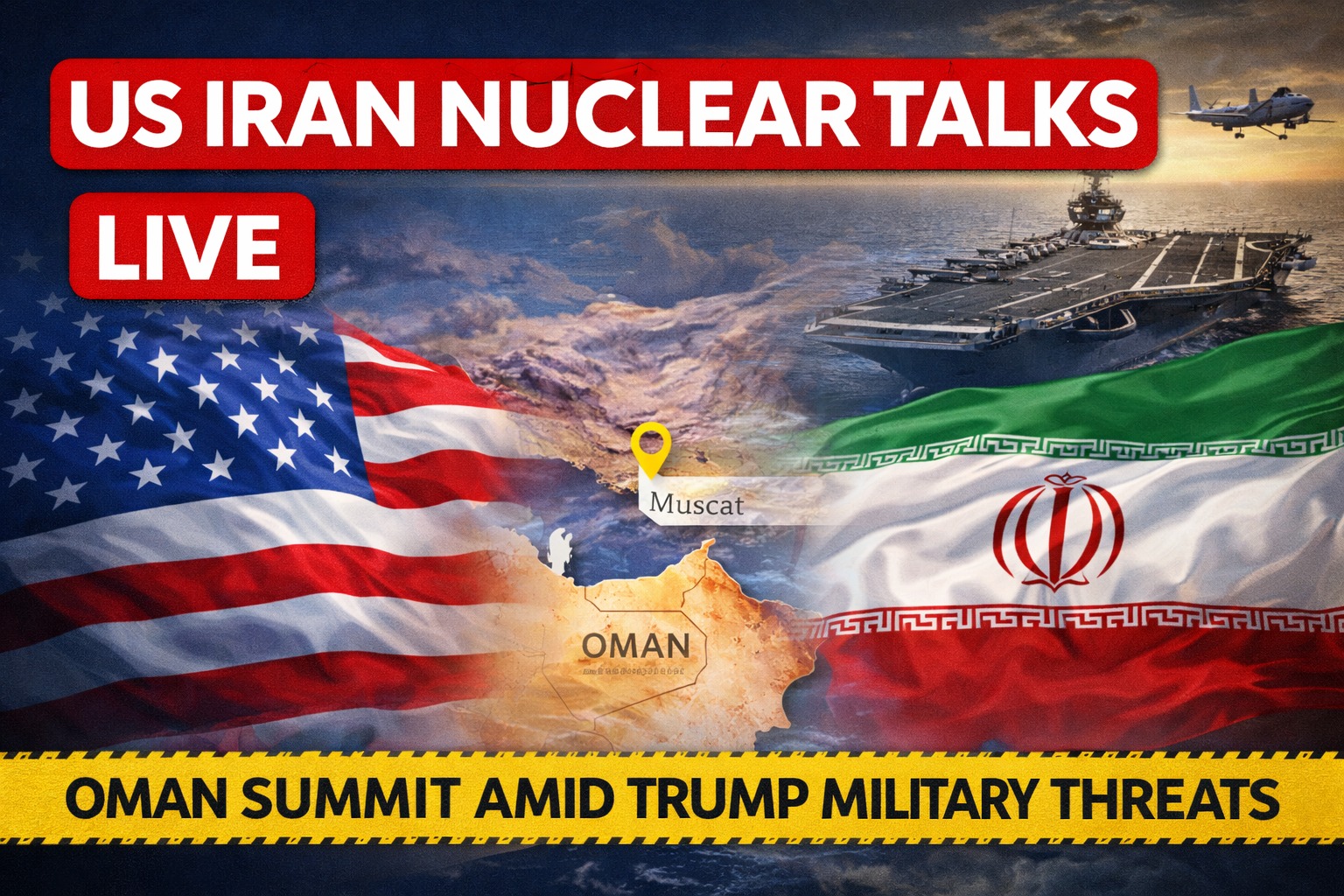
US Iran nuclear talks are back in the global spotlight, sending shockwaves across diplomatic circles and financial markets alike. In a dramatic turn of events, senior officials from Washington and Tehran are meeting in Oman for high-stakes negotiations, even as military threats, drones, and aircraft carriers loom in the background.
This is not just another diplomatic meeting. This is a moment that could reshape the Middle East, calm rising tensions—or ignite a new crisis the world is not prepared for.
US Iran Nuclear Talks Begin in Oman Amid Rising Global Tensions
The decision to hold US Iran nuclear talks in Muscat, Oman, comes at a critical moment. Over the past week, tensions escalated sharply as the United States increased its military presence near Iran, including deploying an aircraft carrier strike group.
Despite the aggressive posturing, both nations stepped back from the brink.
Oman, known for its quiet diplomacy, has once again become the bridge between two rivals who struggle to trust each other but fear the cost of conflict even more.
Why Oman Was Chosen Again
- Neutral diplomatic history
- Trusted by both Washington and Tehran
- Previously hosted secret nuclear discussions
- Far from immediate conflict zones
This choice alone signals a good news moment—both sides still believe diplomacy has value.
US Iran Nuclear Talks and Trump’s Shadow Over Diplomacy
Former US President Donald Trump’s words continue to hover over the negotiations. His recent comments about the US “armada” near Iran being larger than any force deployed elsewhere sent a clear message—pressure remains very real.
Trump stated bluntly:
“If we make a deal, that’s good. If not, we’ll see what happens.”
That single line added fear, urgency, and uncertainty to already fragile US Iran nuclear talks.
Iran Bets Trump Has No Regime-Change Plan
Analysts believe Iran is making a calculated gamble.
Their bet?
That Washington wants limits—not collapse.
Tehran believes Trump may threaten military action, but lacks appetite for regime change, especially amid global instability and election-year politics.
This assumption could shape how far Iran is willing to bend—or stand firm.
Iranian Foreign Minister Speaks: ‘We Engage in Good Faith’
Ahead of the talks, Iran’s foreign minister Seyed Araghchi took to social media with a carefully worded message that instantly went viral.
He said Iran enters talks with:
- Open eyes
- Strong memory of broken promises
- Firm commitment to its rights
His statement emphasized:
- Mutual respect
- Equal standing
- Honored commitments
This tone reflects Iran’s clear position in US Iran nuclear talks: compromise is possible, but surrender is not.
What the US Wants vs What Iran Wants
Here lies the biggest roadblock.
The US wants:
- Nuclear limits
- End to regional proxy support
- Discussion on human rights
- Broader security commitments
Iran wants:
- Nuclear talks only
- Sanctions relief
- No discussion on internal affairs
This agenda clash makes progress difficult—and explains why expectations remain cautious.
Military Incidents Add Pressure
Just days before the talks:
- A US carrier shot down an Iranian drone
- Iran said it was on a surveillance mission
- The US called it self-defense
Such incidents underline how fragile the situation is. One misstep could derail US Iran nuclear talks entirely.
As the world watches Muscat closely, it’s impossible to ignore how much is at stake. These US Iran nuclear talks are happening against a backdrop of protests inside Iran, rising oil price volatility, global election uncertainty, and regional instability stretching from Gaza to the Red Sea.
For ordinary people, this isn’t abstract diplomacy. A successful outcome could mean calmer markets, safer shipping routes, and fewer war headlines. A failure could mean sanctions tightening, oil prices surging, and the constant fear of escalation.
What makes this moment particularly intense is the emotional fatigue on both sides. Years of broken agreements, sanctions, threats, and walkouts have left scars. Yet, both Washington and Tehran seem to understand one truth: walking away now may cost more than staying at the table.
That realization alone is a big change from recent years.
There is also a deeper global message unfolding here. The US Iran nuclear talks are no longer just about centrifuges or uranium levels. They represent whether diplomacy still has power in a world increasingly driven by force, fear, and fast-moving crises.
Oman’s quiet rooms may not deliver instant breakthroughs, but even small progress could reopen channels long thought dead. History shows that the most durable agreements often begin with modest steps taken in tense moments like this one.
For now, the world waits—watching statements, reading between lines, tracking movements in the Arabian Sea, and hoping diplomacy holds.
Because when two long-time adversaries choose dialogue over destruction, even briefly, it sends a signal that peace—however fragile—is still possible.
The US Iran nuclear talks in Oman are more than negotiations—they are a test of patience, memory, and global responsibility. Whether this becomes a breakthrough or another missed chance will shape headlines for months to come.
Stay alert. Stay informed.
Share this update with anyone following global politics—because what happens in Oman may affect us all.
FAQ: What are US Iran nuclear talks and why are they important?
US Iran nuclear talks are negotiations aimed at limiting Iran’s nuclear program in exchange for sanctions relief. They matter because success could reduce Middle East tensions, stabilize global markets, and prevent a wider conflict.

The Founder of Fresh Rise and a global educator, a digital news platform focused on delivering clear, verified, and meaningful stories that matter to everyday readers. I write about current affairs, government schemes, education, social issues, and global developments, presenting complex topics in a simple and easy-to-understand format.
With a background in teaching and content creation, I believes that information should be accessible to everyone. Through Fresh Rise, i aim to help readers stay informed with factual reporting, practical insights, and timely updates.